
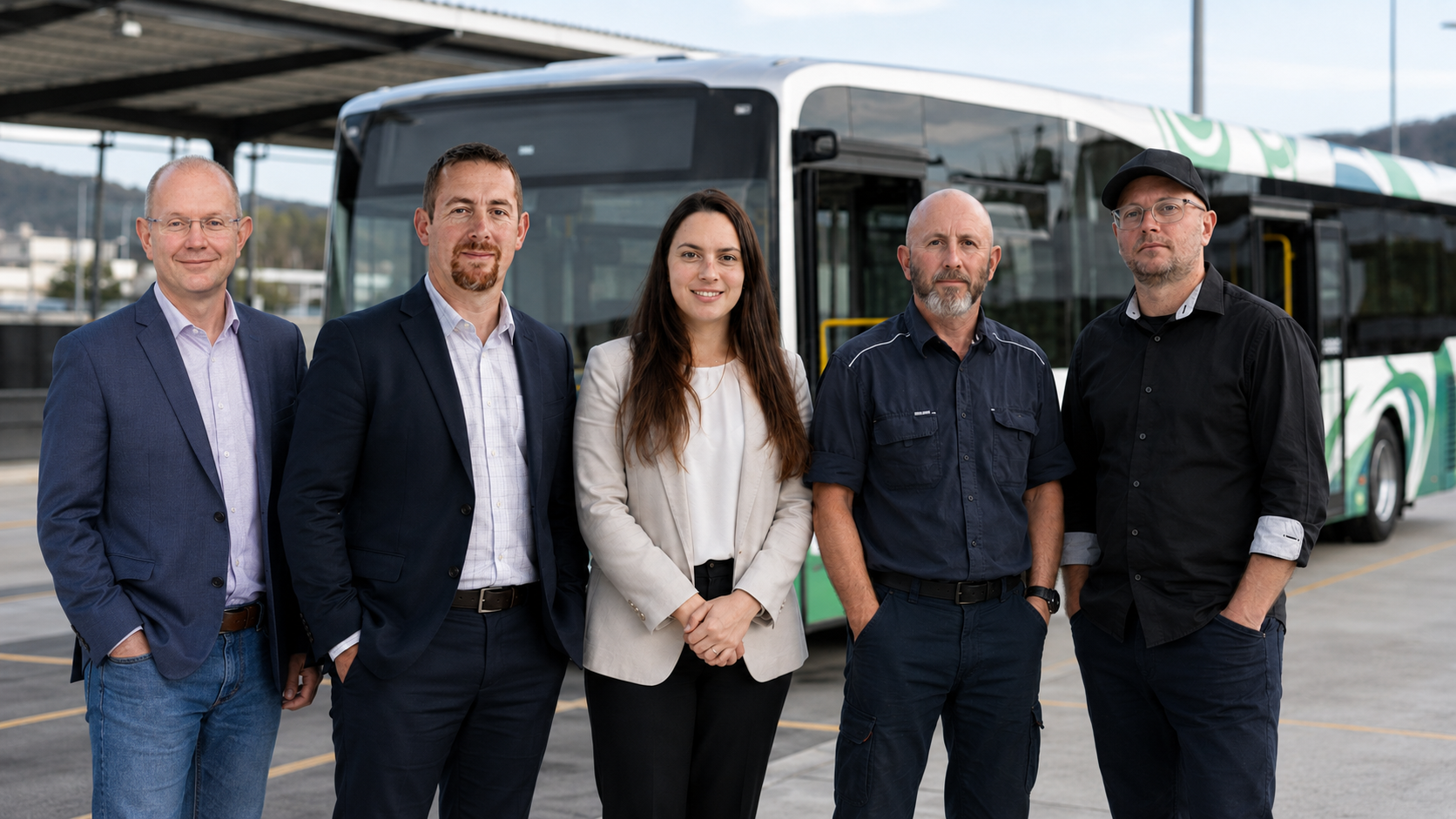
Leadership
Tahi Transit is led by transport people, commercial thinkers and practical operators.
Public transport contracts require more than ownership and ambition. They require leadership across safety, compliance, fleet readiness, driver teams, workshop standards, passenger care, reporting, workforce development, community engagement and council partnership.
Our leadership team brings together hands-on transport experience, commercial discipline, local accountability, operational knowledge and a clear commitment to building public transport services that communities can trust.
Tahi Transit exists to deliver safe, reliable, accessible and fully electric public transport with environmental and cultural sustainability built into every decision.
Led by People Who Understand Responsibility
Public transport is a public responsibility.
Every day, passengers rely on the service to get to school, work, health appointments, shops, community activities and home again. Councils rely on operators to deliver the contract honestly, safely and consistently. Drivers rely on leadership to support them properly. Communities rely on the network to be dependable, respectful and easy to use.
Tahi Transit’s leadership model is built around that responsibility.
We believe strong transport leadership is practical, visible and accountable. It means understanding the road, the depot, the driver, the passenger, the council contract and the wider community impact of every service.
Dayton Howie
Co-owner | Managing Director
Dayton Howie leads Tahi Transit with a strong combination of local connection, commercial discipline and hands-on transport experience.
Born in Whangārei and raised in rural Northland, Dayton brings a deep personal understanding of Te Tai Tokerau and the communities Tahi Transit has been created to serve. His background has always been close to vehicles, machinery, service delivery and practical problem solving.
Dayton’s transport experience includes leadership across passenger transport, heavy vehicles, fleet operations, tours, charters and commercial service delivery. Through his work in the bus and coach sector, he has developed a clear view of what makes transport succeed: reliability, early planning, strong systems, good people and an operator that understands the place it serves.
For Tahi Transit, Dayton’s focus is simple: build a public transport company that is reliable on the road, disciplined behind the scenes and respectful in the community.
He believes public transport works best when it is locally accountable, professionally managed and planned properly from the beginning. That approach shapes Tahi Transit’s commitment to safe operations, electric fleet readiness, cultural respect, practical reporting and long-term council partnership.
Frankie Howie
Co-owner | Commercial Governance & Values
Frankie Howie brings commercial discipline, governance thinking and a strong people-focused perspective to Tahi Transit.
With a background in financial services, credit and risk-aware decision-making, Frankie understands the importance of careful stewardship, clear systems, accountability and long-term responsibility. These are essential qualities for a public transport operator delivering council and government contracts.
As co-owner, Frankie helps shape the standards and values behind Tahi Transit: practical, respectful, financially responsible, community-minded and built for trust.
Her contribution supports the company’s focus on responsible growth, clear governance, commercial discipline and a culture where decisions are made carefully rather than reactively.
For Tahi Transit, public transport is not simply a vehicle operation. It is a public service. Frankie’s role helps ensure the company remains grounded in responsibility: to councils, passengers, staff, whānau, communities and the environment.
Doug Thomson
Director
Doug Thomson supports Tahi Transit as a Director, bringing an additional layer of governance, strategic oversight and commercial discipline to the business.
His focus is on helping ensure Tahi Transit grows carefully and sustainably, with strong decision-making, clear accountability and a practical approach to risk, investment and long-term public transport delivery.
As Tahi Transit develops its electric fleet and council transport operations, Doug helps maintain the company’s focus on what matters most: safe, reliable services, responsible growth and delivering on the commitments made to councils and communities.
John Connell
Workshop & Fleet Supervisor
John Connell leads one of the most important parts of any public transport operation: fleet readiness.
A reliable bus network depends on what happens before the bus leaves the depot. Vehicles need to be inspected, maintained, cleaned, checked, monitored and ready for service every day. Small mechanical issues need to be caught early. Defects need to be taken seriously. Maintenance needs to be planned, not left to chance.
John brings practical workshop leadership and hands-on mechanical knowledge to Tahi Transit’s fleet standards.
His role supports:
Daily vehicle readiness
Preventative maintenance planning
Defect reporting and rectification
Workshop coordination
Fleet presentation
Roadworthiness and safety checks
Accessibility equipment checks
Electric fleet maintenance planning
Spare vehicle readiness
Long-term asset care
For council contracts, workshop discipline is not a background function. It is central to safety, reliability and public confidence.
John’s focus is on keeping vehicles safe, compliant and ready for service, so the operation can deliver what passengers and councils expect: buses that turn up, perform properly and represent the network well.
Benjamin Dale
Marketing, HR & Stakeholder Engagement
Ben Dale supports Tahi Transit across marketing, workforce communication, stakeholder engagement and people-focused business development.
Ben brings a broad background across transport, tourism, events, cruise operations, customer experience and commercial growth. Before working directly in bus and coach operations, he spent years on the client side of transport, buying and coordinating large-scale passenger movements for cruise, inbound tourism and group travel.
That experience gives him a practical understanding of what councils, clients and passengers need from an operator: pre-planning, honesty, flexibility, timing, clear communication, good deployment and people who understand the pressure points behind a successful movement.
At Tahi Transit, Ben’s focus is on the human and communication side of the business.
That includes:
Public-facing communication
Recruitment messaging
Driver attraction and retention support
HR communication
Stakeholder engagement
Community-facing content
Tender and capability positioning
Passenger experience language
Website and digital strategy
Brand trust and public reputation
Ben’s approach is based on a simple idea: good systems should make it easier for people to do the right thing.
For Tahi Transit, that means helping build a company that communicates clearly, recruits carefully, respects its people, tells the truth about what it can deliver and presents itself professionally to councils, staff and communities.
Practical Leadership Across the Whole Operation
Tahi Transit’s leadership team is designed around the real requirements of public transport delivery.
A successful operator needs more than one strong person at the top. It needs clear responsibility across the whole operation.
That includes:
Ownership and governance
Public transport strategy
Contract delivery
Fleet and workshop control
Driver standards
Safety and compliance
Electric fleet readiness
Passenger care
Local recruitment
Council communication
Community relationships
Public-facing trust
Tahi Transit brings these areas together through a practical leadership model focused on accountability, reliability and continuous improvement.
Local Accountability
Tahi Transit believes local accountability matters.
Public transport is different from ordinary commercial transport. It is visible every day. It affects families, students, older passengers, workers, disabled passengers, visitors, schools, employers, council teams and local communities.
When something works well, the whole community benefits.
When something fails, the whole community feels it.
That is why Tahi Transit is being built around leadership that is visible, responsive and accountable.
We want council partners to know who is responsible. We want staff to know they are supported. We want passengers to feel the service is operated by people who care about the place they serve.
Governance and Commercial Discipline
Long-term public transport contracts require commercial discipline.
Tahi Transit’s leadership approach is designed to support responsible growth, sound decision-making, clear reporting and practical management of risk.
That includes:
Financial responsibility
Contract governance
Reporting discipline
Fleet investment planning
Workforce planning
Compliance oversight
Safety system support
Electric infrastructure readiness
Long-term asset management
Continuous improvement
Public transport operators must be ambitious, but they must also be realistic. Tahi Transit’s leadership model is based on building carefully, planning properly and delivering what has been promised.
Fleet Leadership and Operational Readiness
A public transport service is only as reliable as the fleet behind it.
Fleet leadership connects directly to passenger trust. A well-maintained vehicle arrives on time, presents professionally, operates safely and reduces disruption. A poorly controlled fleet creates complaints, missed trips, safety concerns and reputational risk.
Tahi Transit treats fleet readiness as a leadership priority.
Our approach includes:
Workshop oversight
Daily checks
Maintenance planning
Electric vehicle readiness
Charger and depot coordination
Spare vehicle strategy
Defect escalation
Cleaning and presentation
Roadworthiness
Data-led improvement over time
The fleet is not just a set of assets. It is the physical promise of the service.
People, Drivers and Culture
Drivers are the face of public transport.
They shape how passengers experience the service and how the community feels about the network. Good leadership must therefore support drivers properly, communicate clearly and set standards that are fair, practical and consistent.
Tahi Transit’s people approach is built around:
Clear expectations
Practical training
Respectful workplace culture
Driver wellbeing
Fatigue awareness
Passenger care standards
Local recruitment
Career development
Communication that supports good performance
Pride in serving the community
A strong public transport company is built by people who know what they are doing and feel supported to do it well.
Communication and Stakeholder Trust
Public transport relies on trust.
Councils need accurate reporting. Passengers need clear information. Schools need confidence. Staff need direction. Communities need to feel heard.
Tahi Transit’s leadership team understands that communication is not an optional extra. It is part of service delivery.
Our communication approach supports:
Council reporting
Tender and contract communication
Passenger-facing information
School and stakeholder updates
Community engagement
Feedback handling
Recruitment messaging
Internal staff communication
Public reputation management
A bus service can be technically sound but still lose public confidence if communication is poor. Tahi Transit is built to take communication seriously.
Leadership for Electric Public Transport
Tahi Transit has been created for fully electric public transport.
Electric operations require leadership across more than vehicles. They require coordination between fleet, depot, charging, energy supply, route planning, driver behaviour, maintenance, reporting and contingency planning.
Our leadership team understands that electric transition must be practical.
The goal is not simply to operate electric buses. The goal is to operate electric public transport that is safe, reliable, accessible and ready every day.
That means asking the right questions early:
Can the vehicle complete the duty?
Is the charging plan realistic?
Is the depot ready?
Are drivers trained?
Is there spare capacity?
How will faults be escalated?
How will performance be reported?
How will the service keep running when something changes?
Tahi Transit’s leadership approach is service-first. The fleet must be sustainable, but the service must still turn up.
Leadership With Cultural Respect
Tahi Transit recognises that public transport operates through places with deep identity, history and community meaning.
Leadership must therefore be culturally respectful, locally aware and willing to listen.
That means avoiding tokenism, seeking proper advice where needed, supporting thoughtful bilingual communication and treating local relationships as part of the operation rather than as decoration.
Tahi Transit’s leadership commitment is to build a company that respects mana whenua, supports local people and reflects the communities it serves.
Built to Be Accountable
Tahi Transit is being built for public transport contracts where accountability matters.
Our leadership team brings together ownership, governance, commercial discipline, workshop control, fleet readiness, people communication and public-facing engagement.
We are focused on building a company councils can trust, drivers can be proud of and passengers can rely on.
Safe.
Electric.
Reliable.
Local.
Accountable.
That is the leadership standard Tahi Transit is building around.
Frequently Asked Questions
Who leads Tahi Transit?
Tahi Transit is led by Dayton and Frankie Howie, supported by experienced transport, fleet, workshop, marketing and people-focused leadership.
What is Dayton Howie’s role?
Dayton Howie is co-owner and Managing Director of Tahi Transit. His focus is public transport leadership, local accountability, electric fleet readiness, contract delivery and operational discipline.
What is Frankie Howie’s role?
Frankie Howie is co-owner and supports Tahi Transit across commercial governance, values, risk-aware thinking and responsible long-term decision-making.
What is John Connell’s role?
John Connell supports Tahi Transit as Workshop & Fleet Supervisor, with responsibility for fleet readiness, maintenance standards, defect control, safety checks and vehicle presentation.
What is Ben Dale’s role?
Ben Dale supports Tahi Transit across marketing, HR communication, stakeholder engagement, recruitment messaging, brand trust and public-facing capability positioning.
Why does leadership matter in public transport?
Leadership matters because public transport is a public service. Councils, passengers, drivers and communities need an operator that is accountable, responsive, well-managed and focused on safety, reliability and trust.